Portrait of Matthias Wong

History across time, place, and public life

Matthias Wong

Senior Tutor, Department of History

National University of Singapore

Cultural historian studying how people make sense of rupture, time, and place through archives, maps, museums, and public history.

Explore research

About

I am a cultural historian and Senior Tutor in the Department of History at the National University of Singapore. I study how people make sense of rupture, time, and place: how unexpected events disturb familiar worlds, and how new accounts of the past and future restore, contest, or remake order. The historical core of this work is seventeenth-century Britain.

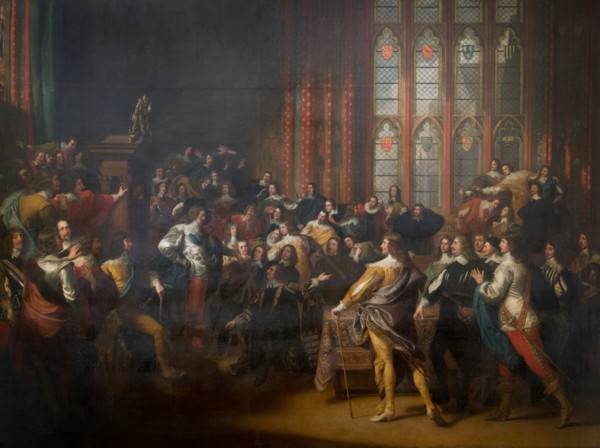
My current book manuscript examines the execution of Charles I in 1649 as a moment of intellectual change and adaptation. It traces how astrologers, historians, and newsbook authors interpreted an unprecedented regicide, and how they placed it within longer narratives of providence, monarchy, generations, and rebellion.

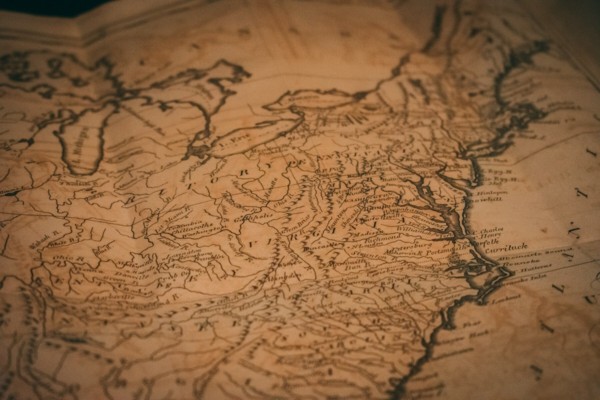
Across my wider research programme, this concern with interpretation and power connects digital history, Indigenous cultural geography, environmental research, and public engagement. I combine close reading with GIS, data visualisation, and computer vision to recover Indigenous presence from historical maps. Work with museums, libraries, universities, and public bodies extends that research into exhibitions, digital resources, curriculum development, and policy evidence.

Moving between archives, spatial methods, and public practice is central to my work. Each makes it possible to ask, in a different register, how knowledge is produced, whose claims become visible, and what historical evidence can do beyond the academy.

I hold a PhD in History from the University of Cambridge, an MSc in International Relations from the S. Rajaratnam School of International Studies, and a joint BA/PhB in History from NUS and the Australian National University. I am Associate Editor of Cambridge Elements in Indigenous Environmental Research, an Associate Fellow of the Higher Education Academy and the Royal Historical Society, and a member of the AHRC Peer Review College.

Publications

Research publications

My publications examine how political rupture changes historical understandings of time and monarchy. The current book project develops this work across a wider archive of seventeenth-century print.

Matthias Meng Yan Wong. “Charles I’s Execution and the Destiny of Monarchy in Britain and Europe.” In Monarchy, the Court, and the Provincial Elite in Early Modern Europe, 54–72. Brill, 2024. DOI

Matthias Meng Yan Wong. “A Pause in Time: History Writers and the Regicide of Charles I.” Historical Research 94, no. 266 (2021): 758–781. Open-access article

Methods contributions

Matthias Meng Yan Wong. “Using Correspondence and Manuscripts in Literary Archives.” In Research Methods for Primary Sources. SAGE/Adam Matthew, 2021. DOI

Matthias Meng Yan Wong. “Using Newspapers as Historical Sources.” In Research Methods for Primary Sources. SAGE/Adam Matthew, 2021. DOI

Dissertation

Matthias Meng Yan Wong. The Impact of the Regicide of Charles I on Contemporary English Notions of Time and the Future. PhD thesis, University of Cambridge, 2019. Cambridge repository

For the current institutional record, see my NUS profile or ORCID.

Projects & Engagement

Beyond the Page

In 2025, I helped lead Beyond the Page, a collaboration between the NUS Department of History and the NUS History Society. Students interviewed 12 History alumni, researched the Department’s archives, and translated their findings into an exhibition at NUS Central Library. The project treated history as a process of collective sense-making while giving students practical experience in oral history, curation, and public communication.

Walking Through a Songline

I convened the Singapore iteration of Walking Through a Songline, an immersive digital exhibition created by the National Museum of Australia and Mosster Studio. Presented at NUS Central Library in 2025–26, the programme included an interdisciplinary public discussion about evidence and ways of knowing across history, physics, museum practice, and Indigenous knowledge systems.

Indigenous collections and digital access

My museum work focuses on interpretation, digital access, and relationships between Indigenous collections and source communities. I led development work on Sharing Stories Across the Ocean, an AHRC-supported collaboration with the North American Native Museum in Zurich. I have also worked with the American Museum & Gardens in Bath through the Treatied Spaces research programme.

Green Toolkit for a New Space Economy

I co-led a university consortium project on how UK space-sector organisations could assess the social, cultural, and environmental effects of their activities. Funded by the UK Space Agency, the project brought together collaborators in history, law, physics, cybersecurity, and user design from the Universities of Hull, Edinburgh, and Southampton, alongside York St John University and an industry partner.

The University of Hull awarded this work its Best Knowledge Exchange Postdoc prize in 2022.

Decolonising UK history provision in schools

I have worked with Pearson Edexcel and AQA on history subject specifications and the review of GCSE textbooks. I have also co-authored evidence and contributed research expertise to the UK Parliament, translating historical scholarship into practical recommendations for curriculum and policy audiences.

Media and outreach

I have contributed historical research and commentary to Channel NewsAsia. This included research and filming for the 2024 On the Red Dot: Family Mysteries episode, an interview on CNA938, and commentary for CNA news articles. I have also given guest lectures for schools in Singapore on historical geography, digital history, and the evaluation of evidence.
Teaching

I teach European history, cultural astronomy, public and applied history, and digital history at the National University of Singapore. Across these fields, I design learning around a common principle: students learn history most fully by making it. They test interpretations against evidence, choose methods suited to the question, and consider how arguments change when they address different audiences.

Recognition and pedagogic research

My teaching received the NUS Faculty Teaching Excellence Award in 2024, followed in 2025 by both the Faculty Teaching Excellence Award and the university-level Annual Teaching Excellence Award.

In 2025, I was awarded a two-year Teaching Enhancement Grant of SGD 25,000 as Principal Investigator for Evaluating the impact of absolute grading on student learning and motivation. The project examines how assessment structures shape learning behaviour and motivation, treating assessment itself as an object of evidence-led inquiry.

Recent NUS courses

  • GEC1050 Skyscapes: Cultural Interpretations of the Sky
  • HY2264 The Making of Modern Europe
  • GEC1030 Metropolis: The City in World History
  • HY5405 Applied and Public History: Theory, Method and Practice
  • HY5419 Digital History: Theory and Practice
  • HY5422 Time and Space: Doing History with GIS
  • HY5301 Internship in History

Learning by doing history

My public- and digital-history teaching gives students experience of producing knowledge for audiences beyond the classroom. In Beyond the Page, students conducted oral-history interviews, worked with departmental archives, and developed an exhibition for NUS Central Library. The project asked them to interpret personal memory as evidence and to create historical work that could speak meaningfully to a broad public. Other courses introduce spatial analysis, digital source criticism, and the practical decisions involved in communicating historical evidence.

Before joining NUS, I taught seminars on temporality and gender for History undergraduates at the University of Cambridge, as well as postgraduate workshops on research development and presentation. At the University of Hull, I designed training for graduate interns in digital storytelling, data visualisation, and research practice.

CloseTerminalE-MailDownloadGitHubAlternate GitHubMenuCheck CircleSpace Shuttleangle-rightWarning